📽️ I Was Sent a Video—And I Was Genuinely Disturbed
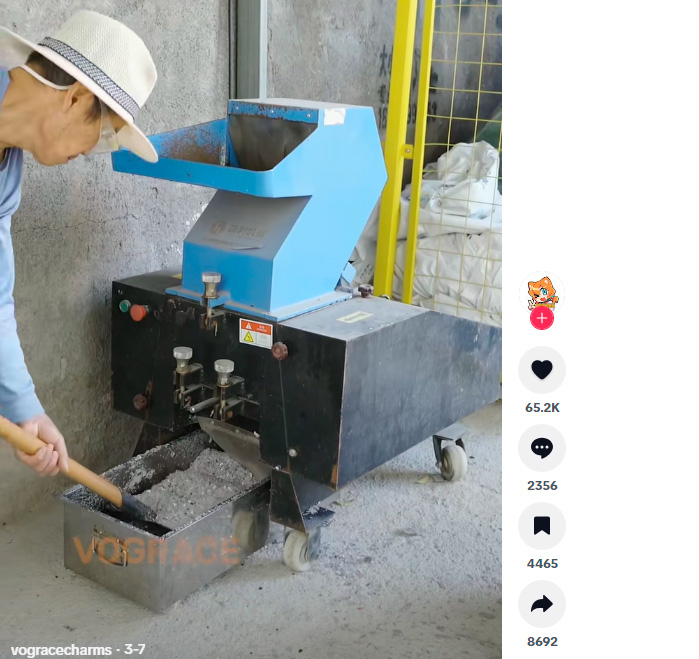
Recently, I was sent a TikTok video posted by the merch manufacturer Vograce. In it, one of their workers is shown grinding waste acrylic charms into a fine dust using industrial machinery.
As someone with a background in custom merchandise, I’ve seen plenty of production methods—but this one left me genuinely unsettled.
👉 Watch the video here (while it’s still up—because it probably won’t be for long)
What’s Actually Being Shredded?
From what I can tell in the video, the items being ground down are fully finished acrylic charms, including:
- UV-printed artwork
- Epoxy resin coatings
- Possibly layered adhesives
To me, this looks like a mix of multiple materials—not clean, raw acrylic. Based on my experience, shredding contaminated plastics like this wouldn’t qualify as responsible recycling under any certified process I know of.
Can This Be Recycled?
As far as I understand, there’s currently only one company in the world producing truly recycled acrylic sheets at scale—and it’s based in Europe. Their recycling requirements are strict. The material must be:
- Uncontaminated
- Traceable
- Free of inks, resins, or adhesives
If what’s shown in the video is indeed a mix of printed, coated, and laminated material, then I highly doubt it would meet those standards. It raises serious questions for me about where this shredded material is actually going, and how it’s being classified.
The Microplastic Problem No One’s Talking About
What really disturbed me was the alarming amount of microplastic dust being created in the process.
The grinding appears to produce fine, airborne particles—a mixture of shredded acrylic, resin, and pigment. I didn’t see any extraction systems or filtration in place. The worker wasn’t wearing a respirator or protective gear.
This isn’t just waste. This is microplastic pollution—right at the source.
And where does that dust go?
- Into the air
- Onto surrounding surfaces
- Into the lungs of workers
- And eventually, into the local environment
As someone who works in this field, I found that incredibly troubling.
A Pattern of Polished Illusions?
I’ve come across Vograce many times throughout my time in the industry. Their public-facing content is always polished—clean tables, smiling employees, organized workspaces.
But in my experience, it’s very easy to stage a factory for a video. Lighting, camera angles, and tight shots can make any workspace look professional—even if reality is very different behind the scenes.
I’m not saying I know exactly what their working conditions are day to day.
But based on this video—and similar content I’ve seen over time—I personally believe there’s a disconnect between what’s shown online and what may really be happening.
Recycling or Just Greenwashing?
To me, calling this process “recycling” is not just misleading—it’s dangerously misleading.
It undermines the credibility of genuine recycling efforts and allows companies to market contaminated waste as eco-conscious—without oversight, certification, or accountability.
True recycling requires:
- Material separation
- Process transparency
- Infrastructure to actually reuse what’s collected
What I saw in that video? It looked like contaminated, mixed-material merch being shredded and labeled “recycled.” No documentation. No clear process. Just plastic dust and a feel-good caption.
Final Thought
This isn’t a legal accusation—it’s my personal reaction.
It’s a response shaped by years of experience in this industry, and grounded in what I saw in that video.
If you’ve watched it too, I encourage you to ask the same questions I am:
- What happens to that shredded material next?
- Are workers protected from airborne plastic exposure?
- Who decides what counts as recyclable—and are those standards actually being followed?
Because from where I stand, this isn’t sustainability.
It’s powdered plastic—and it’s floating in the air we all breathe.


 True cost merch